Why 80% of Building Intelligence Is Dark Data — And How to Fix It
Most property operations run on unrecorded decisions. WhatsApp messages, verbal handoffs, and tribal knowledge form the backbone of building management — yet none of it is captured. Here's why that's a problem, and what the industry is doing about it.
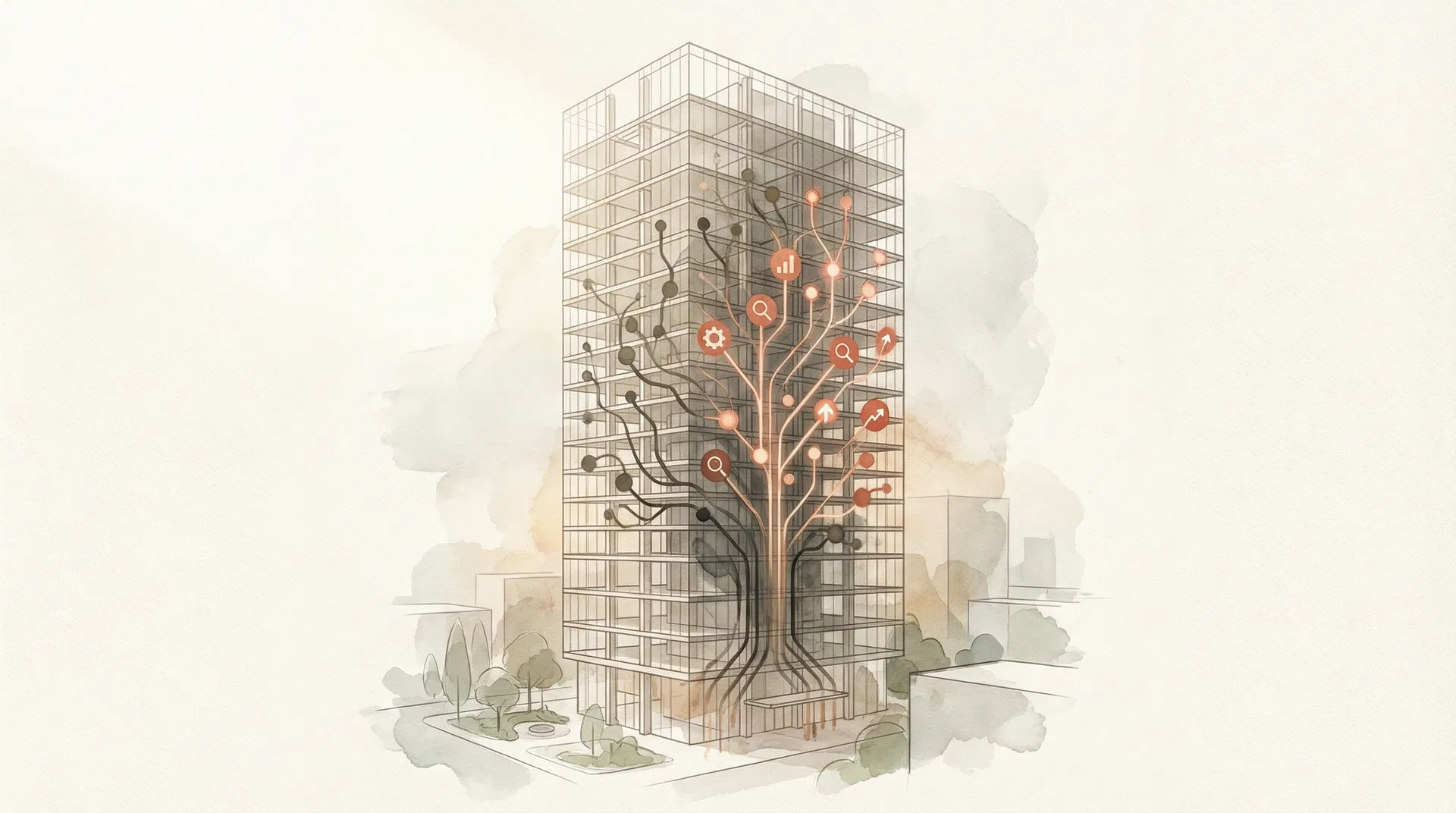
Every building generates thousands of operational decisions each week. A security guard notices a recurring leak pattern. A property manager negotiates a special rate with a plumber. A site supervisor develops a workaround for a temperamental lift system. None of this gets recorded.
We call this Dark Data — the 80% of operational intelligence that lives in WhatsApp messages, verbal handoffs, and the heads of experienced staff. It is the most valuable information in your building, and it is completely invisible to your systems.
The Scale of the Problem
Consider a typical residential estate with 500 units. On any given day, the operations team handles 30-50 tenant requests, coordinates with 5-10 vendors, makes dozens of judgment calls about priorities, and resolves issues using knowledge accumulated over years. Traditional property management systems capture the ticket — "AC not working, Unit 12B" — but miss everything that matters: which contractor responds fastest for this brand of AC, what the tenant's history of complaints looks like, and whether this is part of a building-wide pattern.
In our analysis across 100+ properties, we found that fewer than 20% of operational decisions are recorded in any formal system. The rest exists as institutional memory — knowledge that walks out the door every time a staff member resigns.
Why Traditional Systems Miss It
Enterprise Resource Planning (ERP) systems were designed for transactions: purchase orders, invoices, work orders. Customer Relationship Management (CRM) tools track relationships and sales pipelines. Neither was built to capture the informal, high-frequency decision-making that actually runs a building.
The gap is not a technology failure — it is a design assumption. These systems assume that the important information is structured and intentional. In reality, the most valuable intelligence is unstructured and incidental: a WhatsApp voice note explaining why a particular vendor should never be used for electrical work again, or a passing comment about which tenant always complains during typhoon season.
The Cost of Ignorance
When a site manager with 8 years of experience leaves, the building does not just lose an employee. It loses:
- Vendor intelligence: Which contractors are reliable, which ones overcharge, and which ones have personal relationships with specific tenants.
- Resolution patterns: The fastest way to resolve recurring issues, including workarounds that no manual documents.
- Tenant context: Understanding which complaints are genuine emergencies and which are habitual, and how to communicate with difficult residents.
- Regulatory memory: Which inspections are coming up, what the building's compliance history looks like, and where the documentation gaps are.
We estimate this knowledge loss costs the average property management company US$110,000 or more per year in operational inefficiency, repeated mistakes, and vendor renegotiation.
The Path Forward: Capturing Intelligence Where It Already Lives
The solution is not to ask staff to fill out more forms or log more data into yet another system. The solution is to capture intelligence where it already flows — in the messaging platforms, voice calls, and daily interactions that staff already use.
This is the core principle behind Building Intelligence Systems: instead of creating new workflows, you instrument existing ones. When a property manager resolves an issue via WhatsApp, the system automatically captures the resolution pattern, the vendor used, the time taken, and the outcome. Over time, this builds a living knowledge base that belongs to the building, not to any individual.
What Changes When Dark Data Becomes Visible
Properties that have implemented this approach report transformative results. New staff can access the building's complete operational history on day one. Vendor performance is tracked automatically across every interaction, not just formal reviews. Recurring issues are identified and escalated before they become emergencies.
Most importantly, the building develops institutional memory — a permanent, searchable record of how it operates. Staff turnover becomes a manageable event rather than a crisis. Knowledge compounds rather than evaporates.
The 80% of intelligence that was dark becomes the foundation for smarter, faster, and more cost-effective operations. The question is no longer whether to capture it, but how quickly you can start.
Related Articles
The Hidden Cost of Staff Turnover in Property Management
When your best site manager leaves, they take years of vendor relationships, resolution patterns, and operational intuition with them. We quantify the real cost — and it's far higher than you think.
WhatsApp-Native vs. Tenant Apps: A Data-Driven Comparison
We analyzed engagement data across 100+ properties to understand why WhatsApp-native platforms achieve 920% higher engagement than dedicated tenant apps.
Ready to Give Your Operations Memory?
Join 100+ properties already using Butler Asia to capture institutional knowledge, reduce costs, and deliver exceptional tenant experiences.
Book a Strategy Call